Showing posts with label sanitizer. Show all posts

8/15/2012

Verilux CleanWave VH02WW4 UV-C Sanitizing Sweeper Review

Verilux CleanWave VH02WW4 UV-C Sanitizing Sweeper
Average Reviews:

(More customer reviews)
Purchased this to replace a "shark" that was pathetic. I thought at $ 99.00 it would actually clean. Not so, if the item (more like crumb or piece of cereal) is over a 1/2 inch it won't pick it up. Also it does not clean along edges (and i thought the shark was pathetic, at least it actually swept along the edge under the counter) so it leaves a 1/2 inch of crumbs and dirt around the corner of the floor under the counter. It looks like I didn't even spot vacume. As for the UV light, I'm not a scientist so I can not tell you if it actually kills germs and bacteria, but I think it's an expensive light on the front of a poorly working vacume. Yeiks!

Click Here to see more reviews about: Verilux CleanWave VH02WW4 UV-C Sanitizing Sweeper

Protect your family and pets with the Verilux CleanWave VH02WW4 UVC Sanitizing Sweeper. Featuring CleanWave Technology, this sweeper is lightweight and cord-free for quick and easy cleanups in your kitchen, bath, or baby's room. The Sanitizing Sweeper uses powerful ultraviolet light to kill germs, mold, bacteria and viruses that inhabit low-pile carpeting and floors throughout your home. While the powerful beater brushes snatch up crumbs an dust, the UVC light kills dangerous germs leaving your floors truly clean and disinfected. Because CleanWave Technology uses light, not chemicals, your family is fully protected from exposure to harmful household cleaners.
The Sanitizing Sweeper features rotating brushes and an efficient suction system that picks up dust and dirt from low-pile carpet and hard-floor surfaces. The powerful cordless motor and quick-charge system provides plenty of cleaning ability, and it even comes complete with a multi-length shaft (to convert for use on stairs and upholstery). Four built-in headlights provide a clear view of flooring under chairs and tables, and the entire unit comes complete with a 1-year limited warranty against defects in material and workmanship.
The UVC light is rated 15,000 hours (about 7 years of normal use). Light and powerful, the Verilux Sanitizing Sweeper stores easily in any closet and the dust pin empties into your wastebasket without exposing you to dirt. If want to destroy 99.9 percent of unhealthy and potentially dangerous germs, bacteria, and viruses while your sweep your floors, then you're ready for the Verilux CleanWave VH02WW4 UVC Sanitizing Sweeper.
Cleaning with UVC Light Provides Allergy Relief Many people are concerned about dust mites, germs, bacteria, and viruses lurking on surfaces throughout their homes, but most don't want to use dangerous chemicals to eliminate these microscopic hazards. Through rigorous research and development, Verilux has perfected a way to clean surfaces with safe, effective light that leaves no chemical residue. It's better for you, your children, your home and the Earth.Verilux has three products in its Home Health Series -- the Verilux UVC Sanitizing Sweeper, UVC Sanitizing Wand, and UVC Sanitizing Travel Wand. All three utilize Verilux's exclusive CleanWave Technology.
What is UVC Light? Ultraviolet light is a natural part of everyday sunlight, and it is an essential part of the light spectrum. UVC light is known as the germicidal bandwidth and is a proven antimicrobial agent used in a wide variety of purification and sanitization processes. Just outside the visible light spectrum, UVC light has been used safely in hospitals, clinics and laboratories for more than 60 years. UVC sanitizing light has been effectively used to sterilize surgical equipment, water and the air in operating rooms, and in germicidal lamps to disinfect various types of product containers in other industries. Verilux is proud to bring this proven technology into the home.
The Science of UVC Light -- How Does it Work? Ultraviolet rays with wavelengths shorter than 300 nm are extremely effective in killing bacteria and viruses. Short-wave ultraviolet light (UVC) works by destroying DNA of microorganisms like bacteria, mold, viruses, and dust mites. These compounds break down with exposed to high-intensity UV at 240 to 290 nm. UVC's effectiveness is directly related to the intensity and exposure time.
UV rays must strike the contaminants directly in order to penetrate the microorganism and break down its molecular bonds. This bond breakage translates into cellular or genetic damage, rendering the germs harmless by robbing them of their ability to reproduce.
Spring Cleaning without the Chemicals According to Verilux, your home may contain more deadly chemicals than most laboratories did just over 50 years ago. Many of the contents of common cleaners in your home have been found to be extremely hazardous to the health of children and adults. The all-purpose cleaners you use to clean counters and floors can contain the following chemicals:

Ammonia: Known to cause kidney and liver damage
Butyl cellusolve: Neurotoxin that rapidly penetrates the skin
Ortho phenyl phenol: Severe eye and skin irritant
Diethanolamine (DEA) and Triethanolamine (TEA): Reacts with nitrates in other cleansers to develop carcinogenic nitrosamines
Coal tar: Known carcinogen often used to color or tint products
Paraben: Hormone-disrupting chemical; used as a preservative
And when you spray air fresheners around your home, they often contain:

Formaldehyde: Highly toxic, known carcinogen
Ethoxylated nonyl phenol: Skin contact can cause swelling, burning, peeling, circulatory collapse, coma or death
Naphthalene: Suspected carcinogen
Xylene: Neurotoxin
Butane gas: Used as a propellant; neurotoxin
Paradichlorobenzene: Carcinogen often present in solid deodorizers
If you want to minimize your family's exposure to these types of chemicals, switch to the chemical-free way to sanitize your home with Verilux's clean powerful UVC light.
What's in the Box Verilux CleanWave VH02WW4 UVC Sanitizing Sweeper, multi-length shaft, AC adapter/quick-charge battery charger, and instructions.

Buy NowGet 20% OFF

Click here for more information about Verilux CleanWave VH02WW4 UV-C Sanitizing Sweeper

Read More...

7/26/2012

Activeion ionator HOM Portable Cleaner and Sanitizer Review

Activeion ionator HOM Portable Cleaner and Sanitizer
Average Reviews:

(More customer reviews)
This device has generated controversy here on Amazon, bringing mostly either glowing five star or scathing one star reviews, and the technical discussion has been uninformed. Until such time as the product is evaluated by a neutral expert such as Consumer Reports, I hope to clear up a bit of the scientific side by taking a close look at the information put out by Activeion, a one year old marketing operation in Minneapolis. I have not tested the device myself - nor do I see how anyone could properly test it at home, since that requires a specialized laboratory. This is an engineering analysis; I studied a laboratory test of alleged bacteriocidal properties which the company sponsored and frequently refers to, I analyzed some of the company's patent applications, and I applied my own scientific background in physics and chemistry.
The Activeion product claims to convert ordinary tap water into a powerful cleaning agent and disinfectant by means of an electrochemical process implemented in a handheld spray bottle. The bottle incorporates a battery to pass a current through the water, together with a type of ion exchange (electrolytic) membrane. The basic chemistry is far from new; in fact the phenomenon of electrolysis and its use in producing bleach or chlorine were discovered in the late 1700's, around the time of Benjamin Franklin! It is important to know that the process relies not on water but on SALT water. The method used by the Tennant Company, a manufacturer of commercial cleaning equipment and the corporate parent of Activeion, yields what is usually called "Electrolyzed Water" or "Electrolyzed Oxidizing Water" (EOW). There are several places to read about the relevant chemistry, which can be found by Googling terms such as "electrochemistry" or "electrolysis," or on Wikipedia. Tennant is not the only company which offers this type of technology; there are others such as Electrolyzer Corp., Ecopep Electrocide, and EcaFlo Anolyte, the latter of which has been certified by the EPA as a broad spectrum disinfectant.
Without going into too much detail, the electrolysis process converts salt water into two streams, of which one side generates sodium hypochlorite (otherwise known as ordinary laundry bleach) solution, which of course is a widely used cleaning agent and disinfectant. (I note that Tennant claims in other patent applications, such as 2007/0187261 - which can be searched from the USPTO website - that a nanobubble mechanism also comes into play. More recently their website switched to talking about a third mechanism, "electroporation" as the antibacterial action. But let's keep this discussion to what seems the primary process.) In the version used by Activeion the two streams are recombined which means the two liquids cancel each other out, and revert to plain salt water. But by and large, the end effect is a short-acting solution which is not very different from adding a few drops of inexpensive bleach to one's water bottle, spraying and then quickly wiping it off.
There are some key factors to appreciate about the process. The first is that it is dependent on the incoming water containing a sufficient amount of salt (sodium chloride), without which the water will have no conductivity for electric current and also generate no hypochlorite. Thus pure distilled water or deionized water will not work at all, and in general the efficiency of the process is highly dependent on the exact analysis of the available water, how much salt, how much other minerals. In fact the Tennant patent referenced above says that the water needs to have a certain minimum of salt content to work properly, about 6 grams per liter. But everyone knows that tap water supplies around the U.S. vary tremendously in hardness and salinity.
Second, the process is energy intensive. A significant amount of electric power is required to convert part of the input salt water to bleach in any useful quantity. Third, the cleaning effect of the electrolyzed water is rather mild. Another of Tennant's patent applications, 2009/0120460, reports some measurements they made for carpet cleaning. In that case, by Tennant's own tests, it was only about 20% more effective than plain water, and not nearly as effective as a standard detergent solution. And this was for the large industrial version of the machine, not the handheld, and the solution was also allowed to soak into the carpet for several MINUTES before it was sucked up. So even under these idealized conditions, it had only a mild cleaning effect, and the required soak time makes it impractical for many tasks.
Even if the item being sold here works exactly as claimed, all it appears to do is convert salty water into a sort of temporary weak bleach solution, which is chemically the same as you would buy at the supermarket. The same. It is misleading to say that you will be using 'only pure water to clean, in place of harmful chemicals.' Activeion describes the cleaning as using an 'activated' form of water, which is inaccurate; it is more correct to say that the indispensable ingredient is sodium chloride. Salt may be benign, but once you break it up chemically into sodium and chlorine ions, it becomes potentially harsh. The chloride ion is highly reactive chemically and a well known bacteriocide (swimming pools, water treatment). In its pure form, chlorine gas is not only a 'harmful chemical' but highly toxic - it was used as a poison gas in World War I. The liquid produced by the Activeion is a temporary form of the identical chemical found in Chlorox; except for being short acting, it is not more green or less toxic. As Tennant themselves write in the first referenced patent filing, "the anolyte .. is acidic in nature and contains very strong oxidants in the form of active chlorine" .. and .. "care should be taken on surfaces having a potential for corrosion." In other words, Tennant says that the liquid sprayed out by this bottle could pit and scar a metal surface! It produces chlorine; only a quite expensive form of chlorine. Indeed, way more expensive, since $180 will buy you enough Chlorox to last an ordinary household hundreds of years. The only undeniably green thing about chlorine is its color - yellowish green.
Taking all this into account, the remaining question is really whether the scaled down, handheld device being sold here is actually effective in producing a strong enough solution to do anything useful. So next let's move from the theory to exactly what Activeion claims to be the laboratory proof that their handheld device is "99.99% effective in killing E. coli bacteria." The relevant document is posted on Activeion's website in the form of a report they sponsored from ATS Labs in Eagan, Minnesota, a company which carries out bacteriological tests for a fee. The key word here is "sponsored" - the company paid ATS to do this. Amazon won't allow posting of a link, but you'll find it if you look, or see Comment #1 below. I read this report carefully.
Now think back to junior high school. Suppose someone asked you to test a spray bottle which converts tap water into an antibacterial, how would you go about doing that? Well, if you had the expertise gained from taking ninth grade General Science, you would probably prepare three glass slides with a standard bacterial load on each (such as letting your dog lick each one). One you would keep aside as a control. The second you would dip in your local tap water - which of course you would obtain from your very own tap. Even better, you might use a range of tap waters from different sources. The third slide would be treated with the same water squirted through the magic spray bottle you were trying to test. This would make a great science project, and you might get to represent your school at the state fair!
Pretty logical, right? But - amazingly - this is not what ATS Labs did at all. Instead, they signed a contract with Activeion which required (this is all written down in the report) that ATS would use only the `tap water' provided to them by Activeion, and furthermore they had to promise NOT TO ANALYZE IT in any way. No suspense here by the way - it did end up killing the bacteria. Annihilated them. Are you surprised?
In fact, it is not quite accurate to say that Activeion insisted on providing the testing lab with their own preferred `tap water.' To be more precise, they supplied an UNKNOWN LIQUID. There is absolutely no way to know what was in that liquid - and significantly, ATS was also required to GIVE IT ALL BACK at the end of the tests, and not retain a sample - which I found a bit suspicious. It could have been some kind of tap water, or highly concentrated salt water, or distilled water, or it could have been not water at all but commercial bleach, or another disinfectant, or battery acid, or Chanel Number 5, or the kind of cheap tequila used at frat parties to make large volumes of bad margaritas. Activeion made sure there was no way to ever know.
Furthermore, it is considered a procedural error for a consumer product testing lab to accept the handheld spray/processing unit direct from the company; instead it should have been purchased from a regular retail channel. Normally I would not be concerned but in this case - given Activeion's unusually intense and fervent campaign to market this - the company might not be above providing a souped-up unit to fake the test, which they could do for example by replacing a cheap ion exchange filter with a more expensive, high performance version, or installing more powerful batteries. This is why, to eliminate any such doubts, Consumer Reports buys all their products at retail and accepts nothing direct from the manufacturer.
In other words, the ATS Labs antibacterial test pointed to by Activeion as a pillar of their credibility...Read more›

Click Here to see more reviews about: Activeion ionator HOM Portable Cleaner and Sanitizer


Buy Now

Click here for more information about Activeion ionator HOM Portable Cleaner and Sanitizer

Read More...

11/06/2011

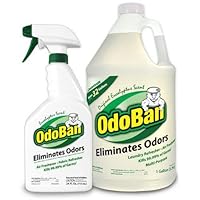
OdoBan Odor Eliminator - RTU Spray W/1 Gallon Concentrate Review

OdoBan Odor Eliminator - RTU Spray W/1 Gallon Concentrate
Average Reviews:

(More customer reviews)
I have 3 dogs and 4 cats - so keeping the house clean and smelling fresh is a constant choir.
Then ... one of the cats started urinating in the front room ... and the smell was awful! I tried at least 6 or 7 cleaners/remedies and nothing worked. The smell always came back.
That is ... until I used OdoBan! One application and the smell is gone - never to have returned. I am impressed beyond words!!
It is multi-purpose --- can use it freshen furniture/clothing, clean carpets, air freshener, and to clean counter tops in the kitchen, etc.
Everything smells fresh and clean.
You won't be disappointed if you try this! It is the best money I have ever spent!

Click Here to see more reviews about: OdoBan Odor Eliminator - RTU Spray W/1 Gallon Concentrate


Buy NowGet 4% OFF

Click here for more information about OdoBan Odor Eliminator - RTU Spray W/1 Gallon Concentrate

Read More...

10/03/2011

Haan SI-35R Floor Sanitizer, Red Review

Haan SI-35R Floor Sanitizer, Red
Average Reviews:

(More customer reviews)
Haan steam floor cleaner lives up to hype. A great product that cleans tile floors like a dream. Plenty of steam power and quick start-up. We have 1300 sqft. of tile that took one hour to clean with a mop, with the Haan SI 35R it takes 20 minutes and the tile is cleaner and there is zero residule. There are very few cleaning products that I would rate as a "must have" but this is definately one! Well designed and performs beautifully.

Click Here to see more reviews about: Haan SI-35R Floor Sanitizer, Red


Buy NowGet 17% OFF

Click here for more information about Haan SI-35R Floor Sanitizer, Red

Read More...